

Starting your day with a Good Morning Dua fills your heart with gratitude, hope, and trust in Allah. In Islam, the early morning is a blessed time to seek guidance, protection, and mercy before beginning daily activities. Reciting a sincere morning dua strengthens your faith, brings inner peace, and reminds you that every new sunrise is a gift from Allah.
Whether you choose a Sunnah dua, read morning adhkar, or share an Islamic good morning message with loved ones, these simple acts invite barakah into your day. By making dua part of your morning routine, you begin each day with positivity, patience, and confidence in Allah’s perfect plan.
What Is an Islamic Good Morning Dua?
An Islamic good morning dua is a short prayer said right after waking up. It is not the same as Fajr prayer, which is the formal dawn prayer. A dua is more personal. It is a direct conversation with Allah, asking for help, protection, and blessings before the day starts. Muslims have used these words for over 1,400 years, following the example set by Prophet Muhammad ﷺ.
This tradition comes from the Sunnah, meaning the recorded habits and sayings of the Prophet ﷺ. Many of these daily morning duas are found in trusted Hadith collections such as Sahih Bukhari and Sahih Muslim. A well-known example is the dua said the moment a person opens their eyes: “Alhamdulillah alladhi ahyana ba’da ma amatana wa ilayhin nushur”, which means praise be to Allah who gave us life after death (sleep), and to Him we shall return. This single line, said with sincerity, is a small act of daily worship that starts the morning on the right note.
Why Reciting Morning Duas Is Important in Islam

Morning prayer in Islam is not just a ritual. It is a way to protect the heart and mind before the busy world takes over. The Quran speaks directly about this habit. In Surah Al-Ahzab, Allah tells believers to remember Him often, in the morning and in the evening. This command shows that morning dhikr is not optional extra credit. It is part of daily Islamic teachings meant to keep a person grounded.
There is also a practical side to this morning spiritual routine. Saying a dua for a blessed day helps calm anxious thoughts before they build up. It reminds a person that rizq, or provision, comes from Allah alone, which reduces stress about money and success. Many scholars describe this practice as a shield against shaytan and negative thinking. A peaceful morning in Islam is not about luck. It is built through consistent remembrance of Allah, one sunrise at a time.
Authentic Islamic Good Morning Duas in Arabic with English Translation
This section gathers some of the most trusted daily Islamic duas recited after waking up and after Fajr prayer. Each one comes from authentic Hadith sources, so you can recite them with confidence. These are not random phrases. They carry real weight in the Sunnah, and many Muslims memorize them early in life.
The table below lists the Sunnah dua upon waking, along with a few other essential morning supplications. Read the Arabic slowly if you are learning, and use the transliteration as a guide until it feels natural.
| Dua Name | Arabic | Transliteration | English Meaning |
| Dua Upon Waking | الْحَمْدُ لِلَّهِ الَّذِي أَحْيَانَا بَعْدَ مَا أَمَاتَنَا وَإِلَيْهِ النُّشُورُ | Alhamdulillahil-lathee ahyana ba’da ma amatana wa ilayhin-nushoor | Praise be to Allah who gave us life after taking it, and to Him we return |
| Sayyid al-Istighfar (Master of Seeking Forgiveness) | اللَّهُمَّ أَنْتَ رَبِّي لَا إِلَهَ إِلَّا أَنْتَ | Allahumma anta rabbi la ilaha illa ant | O Allah, You are my Lord, there is no god but You |
| Dua for Entering the Morning | أَصْبَحْنَا وَأَصْبَحَ الْمُلْكُ لِلَّهِ | Asbahna wa asbahal mulku lillah | We have entered the morning, and all dominion belongs to Allah |
| Dua for Protection | بِسْمِ اللَّهِ الَّذِي لَا يَضُرُّ مَعَ اسْمِهِ شَيْءٌ | Bismillahil-lathee la yadhurru ma’a ismihi shay’un | In the name of Allah, with whose name nothing can cause harm |
| Dua for Ease and Rizq | اللَّهُمَّ إِنِّي أَسْأَلُكَ عِلْمًا نَافِعًا وَرِزْقًا طَيِّبًا | Allahumma inni as’aluka ‘ilman nafi’an wa rizqan tayyiban | O Allah, I ask You for beneficial knowledge and good provision |
Reciting even one of these each morning builds a habit of shukr, meaning gratitude, and strengthens tawakkul, meaning trust in Allah. Over time, this small routine becomes second nature, much like brushing your teeth or making coffee.
Morning Adhkar and Quran Verses to Recite After Fajr
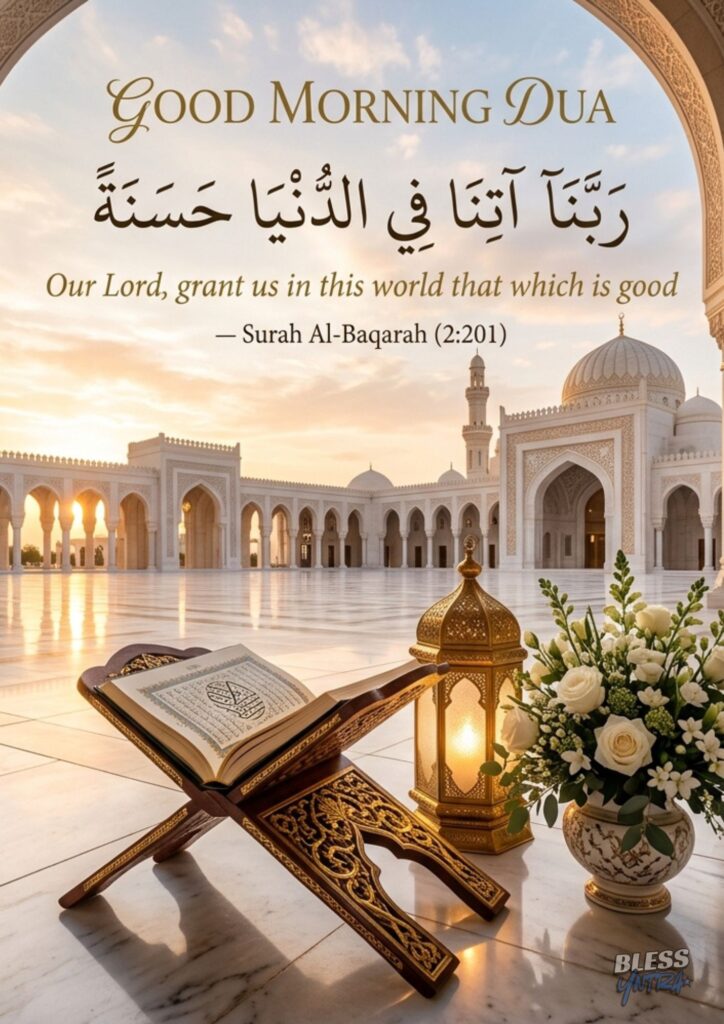
After completing Fajr prayer, many Muslims stay seated for a few extra minutes to recite morning adhkar. This is different from asking Allah for something specific. Adhkar means remembrance and glorification, repeating phrases like SubhanAllah, Alhamdulillah, and Allahu Akbar. These short Quran verses and phrases are known to bring calm and peace of mind before the day’s demands take over.
A few verses stand out as favorites among Muslims across the USA and worldwide. Ayatul Kursi, found in Surah Al-Baqarah, is often called the greatest verse in the Quran because it describes the majesty and power of Allah. Alongside it, many recite Surah Al-Fatihah, Surah Al-Ikhlas, Surah Al-Falaq, and Surah An-Nas, sometimes called the three Quls. These short chapters offer protection from harm and anxiety. The table below breaks down a simple post-Fajr routine.
| Adhkar or Verse | Recommended Count | Main Benefit |
| SubhanAllah | 33 times | Purifies the heart, builds humility |
| Alhamdulillah | 33 times | Expresses gratitude for daily blessings |
| Allahu Akbar | 34 times | Reminds the heart of Allah’s greatness |
| Ayatul Kursi | 1 time | Offers protection throughout the day |
| Surah Al-Ikhlas, Al-Falaq, An-Nas | 3 times each | Shields against evil and worry |
Islamic Good Morning Messages and Wishes
Sending a kind text first thing in the morning can brighten someone’s whole day. Islamic good morning messages blend warmth with faith, making them different from a plain “good morning” text. These Islamic morning greetings often include small phrases like InshaAllah, MashaAllah, or Barakallahu feek, which carry deep meaning even in a short sentence.
Below are simple Islamic good morning wishes you can send to family, friends, or a spouse. Feel free to mix and match them depending on who you are writing to.
For parents: “Good morning, Mom and Dad. May Allah fill your day with peace of mind and good health.”
For a spouse: “Rise and shine, my love. May today bring you closer to Allah’s mercy and every good thing you deserve.”
For a friend: “Good morning! May your day be full of barakah, laughter, and small blessings you don’t expect.”
For children: “Wake up, little one. Allah loves you, and today is a brand new chance to be kind and brave.”
For a general well-wisher: “Good morning. May Allah grant you guidance, strength, and a heart full of shukr today.”
Beautiful Islamic Good Morning Quotes with Duas

Islamic quotes for morning carry wisdom passed down through generations. Pairing a short quote with a matching dua creates a powerful reminder that fits easily into a text message or social post. These quotes often draw from the Quran, from respected scholars, or from general Islamic spirituality teachings that have stood the test of time.
Here is one example worth remembering: “The one who wakes up thinking of Allah has already won half the battle of the day.” Pair this with the simple dua, “Rabbi yassir wa la tu’assir,” meaning O my Lord, make things easy and do not make them difficult. Another favorite line reads, “Patience is the light that guides a tired heart through a hard morning.” These short lines work well as Islamic daily reminders, especially when shared alongside a dua for strength and sabr.
Short Islamic Good Morning Messages for WhatsApp & Social Media
Sometimes a full paragraph is too much. Short, punchy lines work better for WhatsApp statuses, Instagram captions, or quick group chats. These bite-sized Islamic good morning messages still carry meaning, even in just a few words.
A few examples include: “Good morning. Trust the plan of Allah.” Another simple line: “New day, new rizq, new mercy.” A third option: “Bismillah, let’s begin.” These short phrases pair nicely with a sunrise photo or a simple green and gold graphic. Adding a hashtag like #MorningDua or #IslamicReminder helps the post reach a wider circle of friends and followers who enjoy this kind of Islamic positive morning content.
How to Start Your Morning According to Sunnah
The Prophet Muhammad ﷺ followed a clear and simple Islamic morning routine. Understanding this pattern gives modern Muslims a practical roadmap, even with busy American work schedules. The routine begins the night before, since sleeping early makes it far easier to rise for Fajr prayer without struggle.
Step one is waking up before or right at the time of Fajr, saying the waking dua the moment your eyes open. Step two is performing wudu, the ritual washing, with a calm and unrushed mind. Step three is praying Fajr prayer, either at home or at the mosque. Step four is sitting for a few minutes of morning dhikr and reciting a short portion of the Quran, even just a few verses. Step five is expressing shukr for the new day before starting any work or chores. This five-step muslim morning routine takes less than thirty minutes but sets a calm tone that often lasts well into the afternoon.
Benefits of Starting the Day with Islamic Good Morning Duas

The benefits of this habit reach far beyond religious duty. On a spiritual level, daily supplication strengthens iman, meaning faith, and builds a personal bond with Allah that grows stronger over time. It also opens the door to forgiveness, since many morning duas include a request for Allah’s mercy and pardon for past mistakes.
On a practical level, this morning worship habit brings real calm to the mind. People who take a few quiet minutes each morning for reflection often handle stress better throughout the day. This matches what many wellness experts say about mindful morning routines, though for a Muslim the source of that calm is trust in Allah rather than a general mindfulness technique. The spiritual well-being gained from this small habit often shows up in better focus at work, more patience with family, and a general sense of inner peace that carries through even difficult days.
Frequently Asked Questions
What is the best Islamic good morning dua?
There is no single “best” dua, but two stand out as favorites among most Muslims. The first is the simple waking dua praising Allah for a new day. The second is Sayyid al-Istighfar, often called the master of seeking forgiveness, which is considered one of the most complete morning supplications in the Sunnah.
Which dua should I read after waking up?
The most commonly recited morning dua after waking up is the short line thanking Allah for granting life again after the sleep of the night. This dua is found in Sahih Bukhari and takes only a few seconds to say, yet it carries deep meaning.
What should Muslims recite every morning?
A simple routine includes Ayatul Kursi, the three Quls (Surah Al-Ikhlas, Surah Al-Falaq, and Surah An-Nas), along with the tasbih count of SubhanAllah, Alhamdulillah, and Allahu Akbar. Together these form a strong daily habit of morning worship and remembrance of Allah.
Which surah removes anxiety and worry?
Surah Ad-Duha and Surah Al-Inshirah are both known for easing anxiety and worry. These two short chapters remind the reader that hardship is always followed by ease, a message that brings real comfort during stressful times.
Can I send Islamic good morning messages every day?
Yes, sending Islamic good morning messages daily is a kind and welcome habit. Just remember to keep the intention sincere rather than sending the same copied text out of pure routine. A message sent with real care means far more than one sent without thought.

Welcome to Bless Yntra I’ m Habib Saleem, an AI-Powered SEO, and content writer with 3 years of experience.I help websites rank higher, grow traffic, and look amazing. My goal is to make SEO and web design simple and effective for everyone. Let’s achieve more together!