
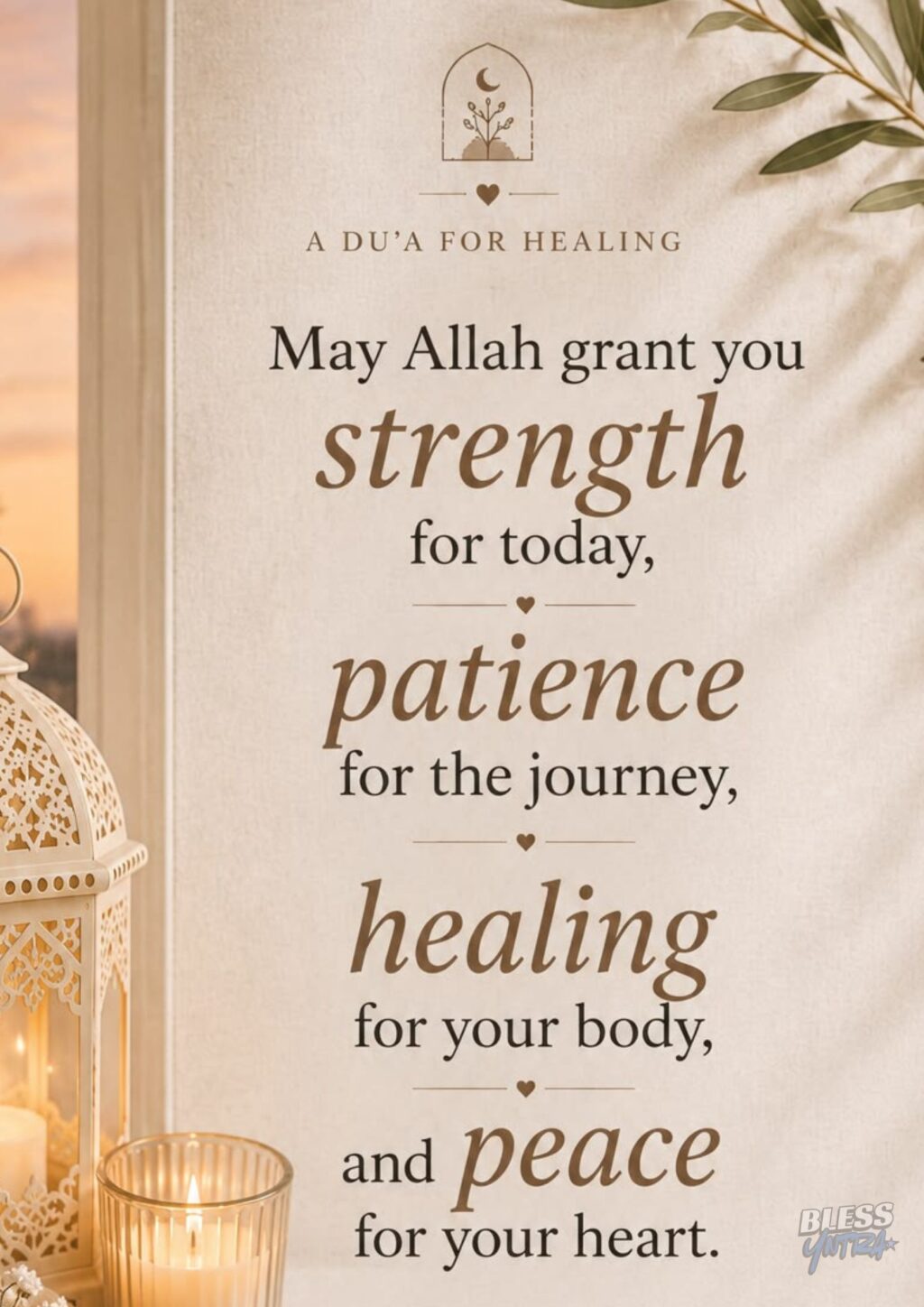
Illness can change daily life in unexpected ways. It may bring physical pain, emotional stress, and uncertainty about the future. During these difficult moments, Duas for Recovery from Illness remind every believer that hope never disappears because healing from Allah is always possible. Islam teaches that sickness is not only a hardship but also an opportunity to grow closer to Allah through patience, sincere worship, and trust. While doctors, medicine, and healthy habits play an important role, every cure ultimately comes from Allah, who is Allah is Ash-Shafi, the One who grants complete healing.
The Quran and Sunnah provide many authentic healing duas, powerful verses, and practical guidance that comfort the heart during illness. These Islamic supplications strengthen faith while encouraging proper treatment. Whether you are making a healing dua for yourself, offering a dua for family member, saying a prayer for loved one, or searching for a dua for hospital patient, these timeless prayers bring peace and hope. Throughout this guide, you will discover authentic prayers, Quranic healing verses, Ruqyah, and Sunnah healing practices that support both physical and spiritual healing.
What Is the Importance of Dua for Recovery from Illness?
Every illness reminds people that health is one of life’s greatest blessings. Islam teaches that sickness can remove sins, increase faith, and strengthen the relationship between a believer and Allah. Making Duas for Recovery from Illness allows you to express complete dependence on Allah while asking for healing from Allah with sincerity. This beautiful act of worship fills the heart with peace because it replaces fear with hope. At the same time, it encourages trust in Allah, even when recovery takes longer than expected.
The teachings of Prophet Muhammad (PBUH) show that every illness has wisdom. Some diseases test patience while others remind people to appreciate the blessings of good health. Alongside medical treatment in Islam, Muslims are encouraged to continue making Islamic prayers for healing, increase dhikr, practice istighfar, and maintain tawakkul. These acts create emotional strength and remind believers that Allah is the Healer, whose mercy is greater than every difficulty.
| Islamic Teaching | Meaning | Benefit |
| Dua | Asking Allah sincerely | Strengthens faith |
| Sabr | Patience during hardship | Brings reward |
| Tawakkul | Trusting Allah completely | Reduces anxiety |
| Shukr | Gratitude | Increases blessings |
| Dhikr | Remembering Allah | Brings peace |
Best Duas for Recovery from Illness (Authentic Islamic Healing Duas)

The most effective dua for recovery comes from authentic Islamic sources. The Quran and Sunnah preserve beautiful prayers that were taught by Prophet Muhammad (PBUH) for different situations. These authentic healing duas include prayers for yourself, family members, friends, and anyone experiencing sickness. They are simple to learn, easy to remember, and suitable for daily recitation. Reading them with sincerity transforms a difficult moment into an opportunity for deeper faith and greater reliance on Allah.
The first famous prayer is the Dua of the Lord of Mankind, beginning with Allahumma Rabban Naas, asking Allah to remove pain because Allah is Ash-Shafi. Another powerful prayer is the Prophet Ayyub dua, beginning with Rabbi anni massaniyad durru, which reflects complete patience during hardship. Muslims also recite As’alullaha al-‘Azim when visiting someone who is ill. Short prayers for a dua for the sick, dua for quick recovery, dua for pain, dua after surgery, and recovery prayer remain among the most beloved Islamic spiritual healing practices because they combine hope, faith, and complete dependence upon Allah.
| Authentic Dua | Source | Purpose |
| Allahumma Rabban Naas | Authentic Hadith | General healing |
| Rabbi anni massaniyad durru | Quran 21:83 | Patience and recovery |
| As’alullaha al-‘Azim | Authentic Hadith | Visiting the sick |
| Dua for pain | Authentic Hadith | Physical discomfort |
Quranic Verses for Healing (Ayat Ash-Shifa)
The Quran is described as guidance, mercy, and healing for believers. Many Muslims regularly read Quranic healing verses because they strengthen both faith and emotional well-being. These verses are often called Ayat Ash-Shifa, meaning verses of healing. They remind believers that true recovery comes from Allah alone. Many families choose reciting Quran for healing every day while making sincere Islamic healing prayer for themselves or their loved ones.
Among the most frequently recited chapters is Surah Al-Fatihah for healing, which has long been associated with healing through Quran. Muslims also read Ayat al-Kursi, Three Quls, Surah Al-Ikhlas, Surah Al-Falaq, and Surah An-Nas for protection from illness and spiritual comfort. These chapters increase hope and provide reassurance during difficult times. Combined with sincere daily healing duas, they become a powerful source of divine healing and inner peace.
| Quranic Chapter | Main Benefit |
| Surah Al-Fatihah for healing | Mercy and healing |
| Ayat al-Kursi | Protection |
| Surah Al-Ikhlas | Strengthens faith |
| Surah Al-Falaq | Protection from harm |
| Surah An-Nas | Protection from evil |
Sunnah-Based Healing Practices for Illness

The Quran and Sunnah teach that spiritual care and physical care should work together. The Prophet encouraged believers to seek treatment while continuing sincere worship. This balanced approach is the foundation of healing according to Islam. Alongside a healing supplication, Muslims practice Ruqyah, follow Ruqyah Shariah, and use simple methods supported by authentic hadith. These traditions comfort the heart and remind believers that every remedy is only effective through Allah’s permission.
Several natural remedies are also mentioned in prophetic medicine. These include honey in Islam, black seed (Nigella Sativa), olive oil in Sunnah, Zamzam water, and Hijamah (Cupping Therapy). These practices should always complement professional healthcare rather than replace it. Together with Ruqyah treatment, Ruqyah for illness, regular morning and evening adhkar, and continuous dua for good health, they create a balanced lifestyle that nurtures both body and soul while seeking the cure from Allah.
| Sunnah Practice | Purpose |
| Ruqyah | Spiritual healing |
| Honey in Islam | Natural remedy |
| Black seed (Nigella Sativa) | Prophetic medicine |
| Zamzam water | Spiritual blessing |
| Hijamah (Cupping Therapy) | Traditional therapy |
| Morning and evening adhkar | Daily protection |
How to Make Dua for Recovery from Illness Correctly
Making Duas for Recovery from Illness is more than repeating beautiful words. It is an act of worship that reflects complete faith in Allah. Begin every healing dua by praising Allah and sending blessings upon Prophet Muhammad (PBUH). Then raise your hands with humility and ask with confidence that Allah is Ash-Shafi. A sincere heart, honest intention, and trust in Allah give every Islamic healing prayer greater meaning. Even if healing takes time, continue your dua for recovery without losing hope because Allah answers every sincere prayer in the best way.
Good manners during supplication also increase peace of mind. Face the Qiblah if possible, remain patient, and avoid rushing for results. Continue dhikr, istighfar, and morning and evening adhkar while making daily healing duas. Many scholars recommend combining reciting Quran for healing with heartfelt prayers because the Quran and Sunnah encourage believers to seek both spiritual comfort and practical solutions. Every healing supplication becomes stronger when accompanied by tawakkul, sabr, and gratitude.
| Recommended Practice | Spiritual Benefit |
| Praise Allah before dua | Shows respect and humility |
| Send blessings upon the Prophet ﷺ | Increases acceptance of dua |
| Make dua with certainty | Strengthens faith |
| Continue dhikr and istighfar | Brings inner peace |
| Practice tawakkul | Builds complete reliance on Allah |
Combining Duas with Medical Treatment in Islam

Islam encourages believers to seek treatment while remembering that every cure comes from Allah. The teachings of Prophet Muhammad (PBUH) clearly support medical treatment in Islam, showing that faith and medicine work together rather than against each other. A believer may visit doctors, take prescribed medicine, and still continue Duas for Recovery from Illness because these actions complement one another. Seeking healthcare never weakens faith. Instead, it reflects wisdom and responsibility while relying on healing from Allah.
This balanced approach protects both physical health and emotional well-being. Along with professional treatment, continue Islamic prayers for healing, Ruqyah treatment, and Quran recitation for recovery. Natural remedies from prophetic medicine, including honey in Islam, black seed (Nigella Sativa), olive oil in Sunnah, and Zamzam water, may also support wellness when used responsibly. These practices should never replace qualified medical advice, but they can become valuable companions on the journey toward physical and spiritual healing.
| Physical Care | Spiritual Care |
| Doctor consultation | Healing dua |
| Prescribed medicine | Ruqyah |
| Healthy nutrition | Quranic healing verses |
| Proper sleep | Prayer for healing |
| Exercise when possible | Dhikr and Istighfar |
Powerful Tips to Increase the Acceptance of Healing Duas
Every sincere believer hopes that Allah accepts every dua for the sick. Although only Allah knows when and how prayers are answered, Islam teaches beautiful habits that increase sincerity. Give charity whenever possible, ask forgiveness through istighfar, remain thankful with shukr, and continue showing kindness to others. These simple acts soften the heart and strengthen your connection with the mercy of Allah. Never stop making Duas for Recovery from Illness, even during difficult moments, because persistence is a sign of faith.
Patience remains one of the greatest qualities during sickness. The story of Prophet Ayyub (AS) reminds believers that even long periods of suffering can end with great reward. His famous prayer, Rabbi anni massaniyad durru, teaches complete trust without complaint. Continue making dua for quick recovery, increase Islamic supplications, and believe that Allah is the Healer. Whether recovery comes quickly or gradually, every sincere prayer brings spiritual reward and strengthens hope in the cure from Allah.
Frequently Asked Questions
What should I say in a dua for the sick?
Pray by asking Allah to grant complete healing, remove pain, and bless the sick person with strength, patience, and a full recovery. A sincere heart is more important than long words.
How to ask Allah for immediate help?
Call upon Allah with humility, trust, and certainty. Ask Him sincerely for guidance, relief, and mercy while believing that He responds in the best way and at the best time.
What is the dua for immediate shifa?
A well-known dua is: “Allahumma Rabban-naas, adh-hibil-ba’s, washfi anta Ash-Shafi, la shifa’a illa shifa’uk, shifa’an la yughadiru saqama.” It asks Allah, the Healer, to grant complete recovery.
How to wish someone well when sick in Islam?
You can say, “May Allah grant you shifa, ease your pain, and bless you with good health.” This is a thoughtful and encouraging Islamic way to express care.
How to ask a sick person about health?
You can politely ask, “How are you feeling today?” or “May Allah grant you shifa. How has your health been?” These words show kindness, compassion, and concern.
Final Thoughts
Health is one of Allah’s greatest gifts, yet illness often reminds people to appreciate every blessing. Duas for Recovery from Illness help transform fear into hope and sadness into faith. Through authentic healing duas, Quranic healing verses, Islamic spiritual healing, and sincere worship, believers learn that every hardship carries wisdom. Whether you are making a dua after surgery, seeking a recovery prayer, or praying for a loved one, never lose confidence in Allah’s mercy and His unlimited power.
Continue seeking both spiritual and physical care throughout your recovery. Follow the guidance of the Quran and Sunnah, maintain daily healing duas, practice Sunnah healing, and never stop asking for healing from Allah. Every illness has an end by His permission, and every sincere believer can find comfort in remembering that Allah is Ash-Shafi, the source of all mercy, hope, strength, and lasting healing. May Allah grant every reader blessings of good health, accept every Islamic prayer for healing, and bless all who seek recovery from sickness with patience, peace, and complete wellness.

Welcome to Bless Yntra I’ m Habib Saleem, an AI-Powered SEO, and content writer with 3 years of experience.I help websites rank higher, grow traffic, and look amazing. My goal is to make SEO and web design simple and effective for everyone. Let’s achieve more together!